Every iconic product, from Dropbox to Zappos, started with a simple, often crude, first version designed to test one core hypothesis. This is the power of the Minimum Viable Product (MVP). For aspiring and practicing Product Managers, mastering the art of the MVP isn't just a skill, it's the fundamental mechanism for de-risking innovation and accelerating career growth. The difference between a PM who gets stuck managing features and one who becomes a product leader often comes down to their ability to define, launch, and learn from an MVP. A Senior PM at a company like Stripe, earning upwards of $220k, is expected to use the MVP process to kill bad ideas quickly and double down on validated ones.
Forget abstract theory. We're going to dissect real-world minimum viable product examples, revealing the strategic thinking, specific tactics, and actionable frameworks you can apply to your own product challenges within the next 48 hours. This is the playbook used by PMs at companies like Google and Meta to validate ideas, secure funding, and build products customers actually want. To further solidify the understanding of an MVP's potential, consider exploring 7 powerful minimum viable product examples that have paved the way for market leaders. In this article, you will learn the replicable strategies behind some of the most successful product launches, complete with direct links and screenshots.
1. Amazon
While not an MVP itself, Amazon serves as the foundational library for any product manager aiming to master the principles behind minimum viable product examples. It's the go-to platform for sourcing cornerstone texts like Eric Ries's The Lean Startup and Alexander Osterwalder's Testing Business Ideas. These books provide the theoretical and practical frameworks essential for developing, launching, and iterating on MVPs. For aspiring and practicing PMs, a deep understanding of these concepts is non-negotiable, making Amazon an indispensable educational resource.
The platform excels by offering unparalleled access and variety. You can get instant access to a Kindle version, have a physical copy delivered tomorrow with Prime, or listen to an audiobook during your commute. This flexibility ensures that learning can fit into any PM's demanding schedule.
Strategic Analysis & Actionable Takeaways
Amazon's real value for product managers lies in its rich data and user-centric features, which can be leveraged for more than just purchasing.
-
Actionable Tip: Deconstruct Customer Reviews: Don't just look at the star rating. Dive into the 3-star and 4-star reviews for books on MVP development. These often contain nuanced critiques and identify gaps in the author's framework, offering you a more balanced perspective than the 5-star raves. This is a quick way to crowdsource critical analysis.
-
Feature to Leverage: 'Look Inside' for Vetting: Use the "Look Inside" feature to preview the table of contents and introduction of any book. This allows you to quickly assess if the content aligns with your specific learning goals, whether you need high-level strategy or tactical execution guides, before you commit to buying.
-
Strategic Sourcing: The 'Customers also bought' Section: This feature is a powerful discovery engine. When viewing a classic like The Lean Startup, pay close attention to the recommendations. It often surfaces newer, more niche titles on topics like user story mapping or Jobs-to-be-Done, helping you stay current with evolving product methodologies.
By using Amazon not just as a bookstore but as a research tool, you can build a robust, modern understanding of MVP principles directly applicable to your work.
Website: Amazon – The Lean Startup
2. Strategyzer
If Amazon is the library for MVP theory, Strategyzer is the hands-on lab. Co-founded by Alexander Osterwalder, the author of Testing Business Ideas, this platform moves product managers from abstract knowledge to structured execution. It's an indispensable resource for those who understand the 'why' behind MVPs and now need the 'how' for designing, running, and learning from validation experiments. Strategyzer offers the official tools and frameworks to rigorously test your riskiest assumptions before writing a single line of code.
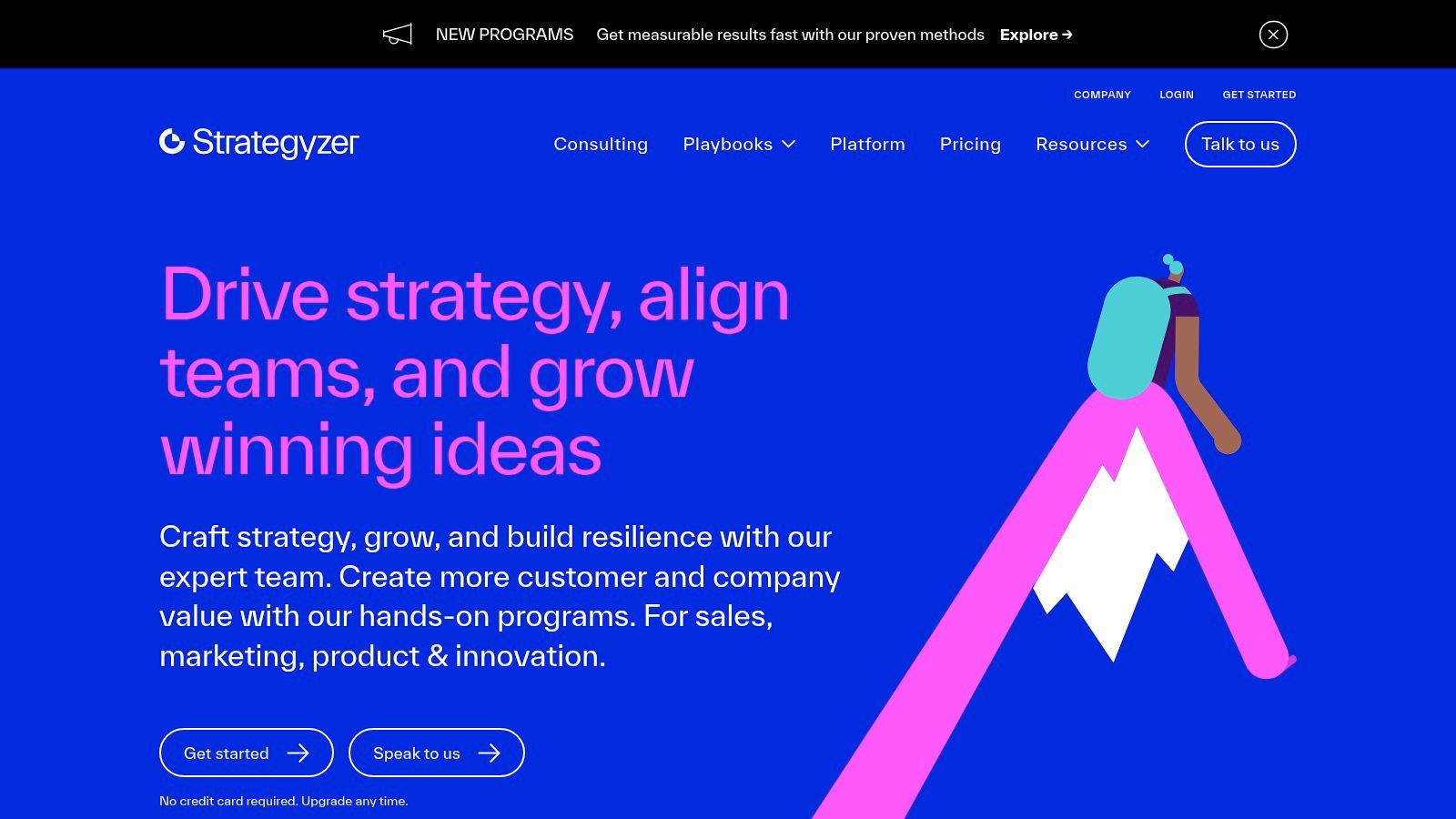
The platform provides a clear, methodical path for applying lean principles. Its self-paced courses (premium-priced with a refund window) and periodic live workshops offer structured learning, but its true power lies in the free, accessible tools. This focus on practical application makes it a vital part of any PM’s toolkit for building effective minimum viable product examples.
Strategic Analysis & Actionable Takeaways
Strategyzer provides the blueprints for turning ideas into evidence. PMs can leverage its resources to bring a disciplined, scientific approach to product discovery and validation. By mastering these tools, you can significantly de-risk your product roadmap.
-
Actionable Tip: Use the Test Card & Learning Card: Don't just brainstorm experiments. Formally document them using Strategyzer's free Test Card template. Define your hypothesis, outline the test, identify your metric, and set a success criterion. Afterward, use the Learning Card to systematically capture what you learned and decide on next steps. This two-part process creates a rigorous, documented learning loop.
-
Feature to Leverage: Experiment Library: Before designing your own MVP test, browse their library of over 40 experiment types. Filter by cost, setup time, and evidence strength. This helps you select the right test for the right assumption, preventing you from building a costly prototype when a simple "Explainer Video" or "Email Campaign" MVP would have sufficed.
-
Strategic Sourcing: Downloadable Previews: For books like Testing Business Ideas, use the free downloadable chapter previews on their site. These aren't just teasers; they often contain core canvases and frameworks you can immediately use with your team to start mapping and prioritizing assumptions without any initial cost. For further reading, you can learn more about how these frameworks fit into larger product growth strategies.
By integrating Strategyzer's templates and library into your workflow, you transition from "building an MVP" to systematically "running a portfolio of experiments," a crucial mindset shift for successful product development.
Website: Strategyzer
3. Coursera
For product managers who prefer a structured, academic approach to learning, Coursera offers a university-level curriculum on product development. It provides a formal pathway to understanding the theory and application behind minimum viable product examples through courses created by top institutions. Programs like the University of Virginia's 'Digital Product Management' Specialization offer a deep dive into the entire MVP lifecycle, from initial hypothesis to validation and iteration, grounding your practical skills in established business theory.
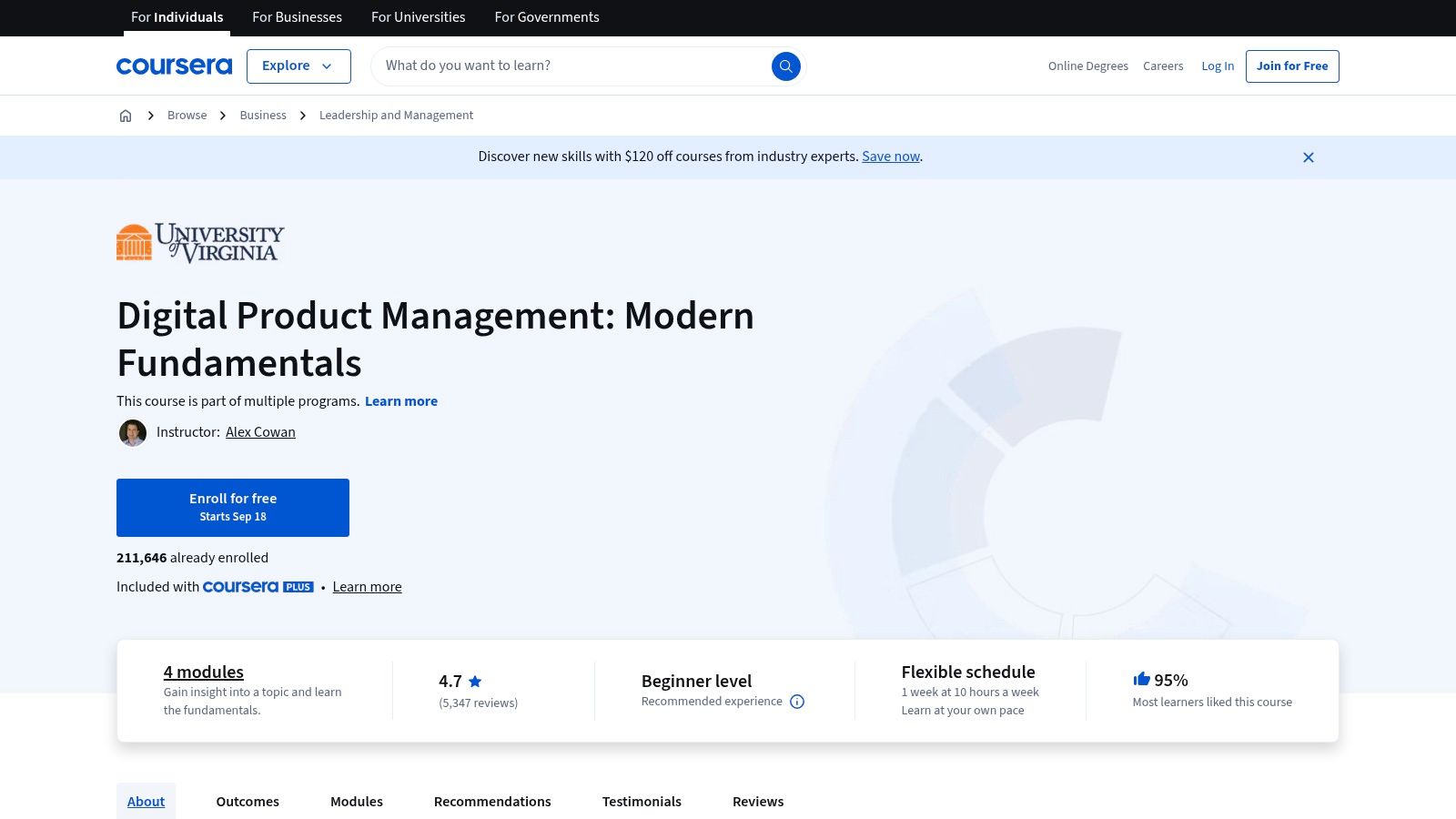
Unlike self-directed reading, Coursera's platform provides a guided experience with video lectures, peer-reviewed assignments, and quizzes to reinforce learning. Many courses can be audited for free, giving you access to most materials without a financial commitment, though a paid certificate (typically $49-$79/month for a Specialization) often requires completing graded projects and offers a valuable credential for your resume.
Strategic Analysis & Actionable Takeaways
Coursera is more than a passive learning tool; it’s an active training ground for honing your MVP planning and execution skills.
-
Actionable Tip: Audit First, Commit Later: Before paying for a certificate, use the audit function to review the course syllabus and watch the first few modules. This lets you assess if the instructor’s style and the course's depth align with your specific learning objectives, ensuring your time and money are well spent.
-
Feature to Leverage: Peer-Reviewed Assignments: Don't just submit your assignments; actively engage in reviewing others' work. Analyzing how other aspiring PMs from around the world tackle the same MVP problem statement provides diverse perspectives, reveals common pitfalls, and sharpens your own strategic thinking.
-
Strategic Sourcing: Focus on Specializations, Not Single Courses: Look for multi-course "Specializations" that include a final capstone project. These capstones often require you to build a comprehensive MVP plan for a fictional or real product, forcing you to apply all the concepts you've learned in a practical, portfolio-worthy project.
By leveraging Coursera's structured environment, you can systematically build a strong, credential-backed foundation in MVP strategy that directly translates to real-world product management.
Website: Coursera – Digital Product Management
4. Harvard Business Publishing Education (HBPE)
For product leaders looking to train their teams or individual PMs aiming to deepen their strategic thinking, Harvard Business Publishing Education (HBPE) is a gold-standard resource. It moves beyond theoretical blog posts into the realm of rigorous, data-driven business case studies. These are the same materials used in top MBA programs to teach strategic decision-making, including detailed analyses of real-world minimum viable product examples and lean startup experiments.
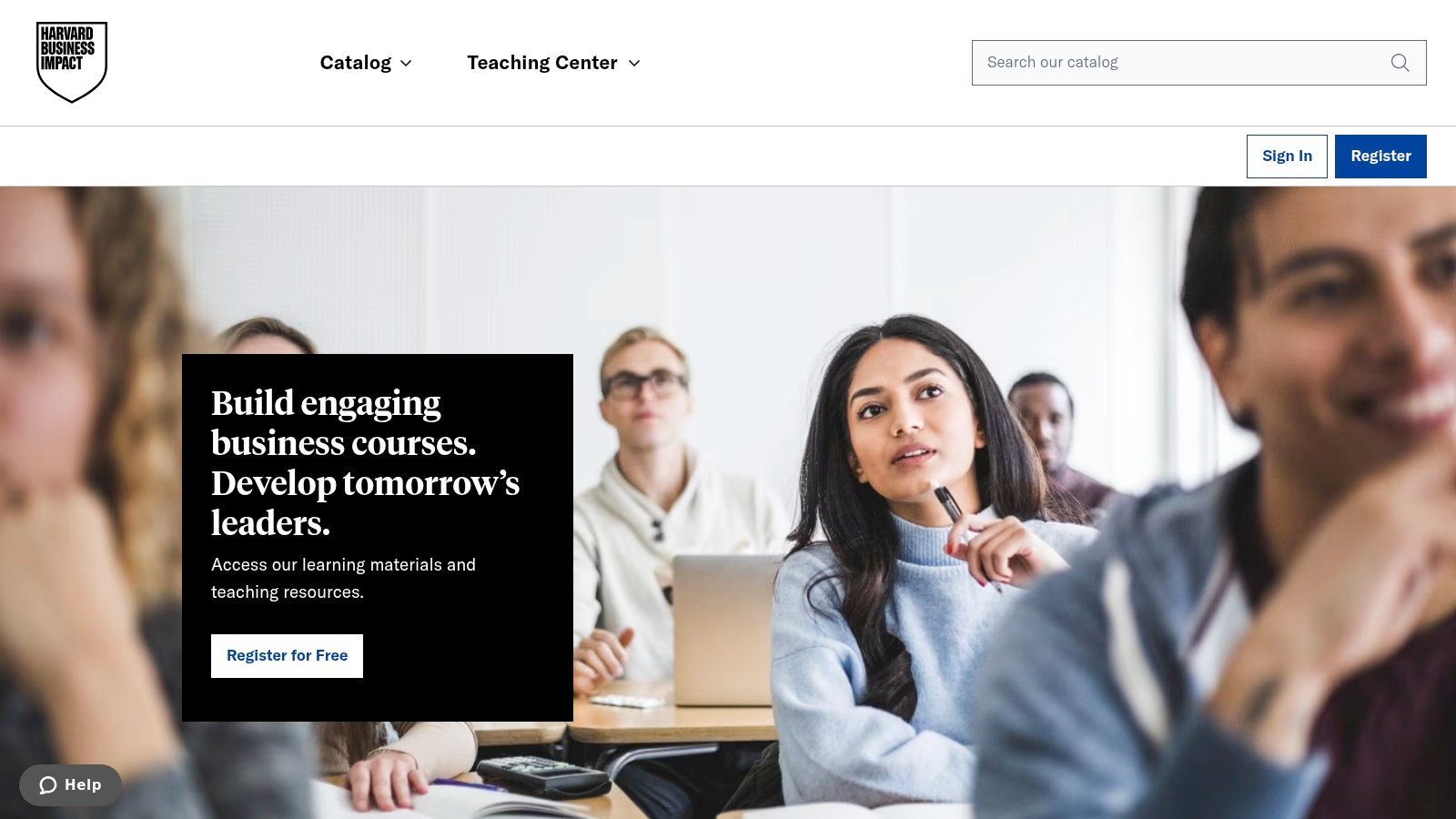
HBPE offers unparalleled depth, providing access to case studies that dissect the critical decisions, market failures, and strategic pivots of well-known companies. While some content requires a verified educator account for full access or discounts, individual cases are available for purchase (around $8.95 per case), making this an accessible tool for serious self-study or focused team training sessions. The cost can be a factor for large-scale use, but the ROI in terms of strategic insight is significant.
Strategic Analysis & Actionable Takeaways
HBPE’s real power lies in its structured learning scenarios, forcing you to step into the shoes of a decision-maker and analyze complex, ambiguous product situations.
-
Actionable Tip: Run a "Case Day" with Your Team: Purchase a relevant MVP-focused case study (like those on Dropbox or Rent the Runway) and run a workshop. Assign the case as pre-reading, then facilitate a discussion using the provided teaching notes as a guide. This simulates a high-stakes decision environment and builds your team's collective muscle for product strategy and validation.
-
Feature to Leverage: Learning Objectives & Teaching Notes: Each case comes with clearly defined learning objectives. Before purchasing, review these to ensure they align with your specific skill development goals, such as customer discovery or market validation. The accompanying teaching notes (often for educators, but sometimes accessible) provide a structured framework for analyzing the case.
-
Strategic Sourcing: Search for Key Frameworks: Use the platform's search function not just for company names but for core PM concepts like "lean startup," "customer validation," or "pivot." This will surface a curated list of case studies and articles that directly address the principles behind building effective minimum viable product examples, allowing for a deep, focused dive into specific methodologies.
Website: Harvard Business Publishing Education
5. Y Combinator Startup Library
Where formal books lay the theoretical groundwork, the Y Combinator Startup Library provides the raw, tactical execution playbook. This completely free resource is an essential supplement for any product manager looking to understand how the most successful startups actually built their minimum viable product examples. It's a goldmine of essays, videos, and templates straight from the founders and partners who have navigated the earliest, most critical stages of product development.
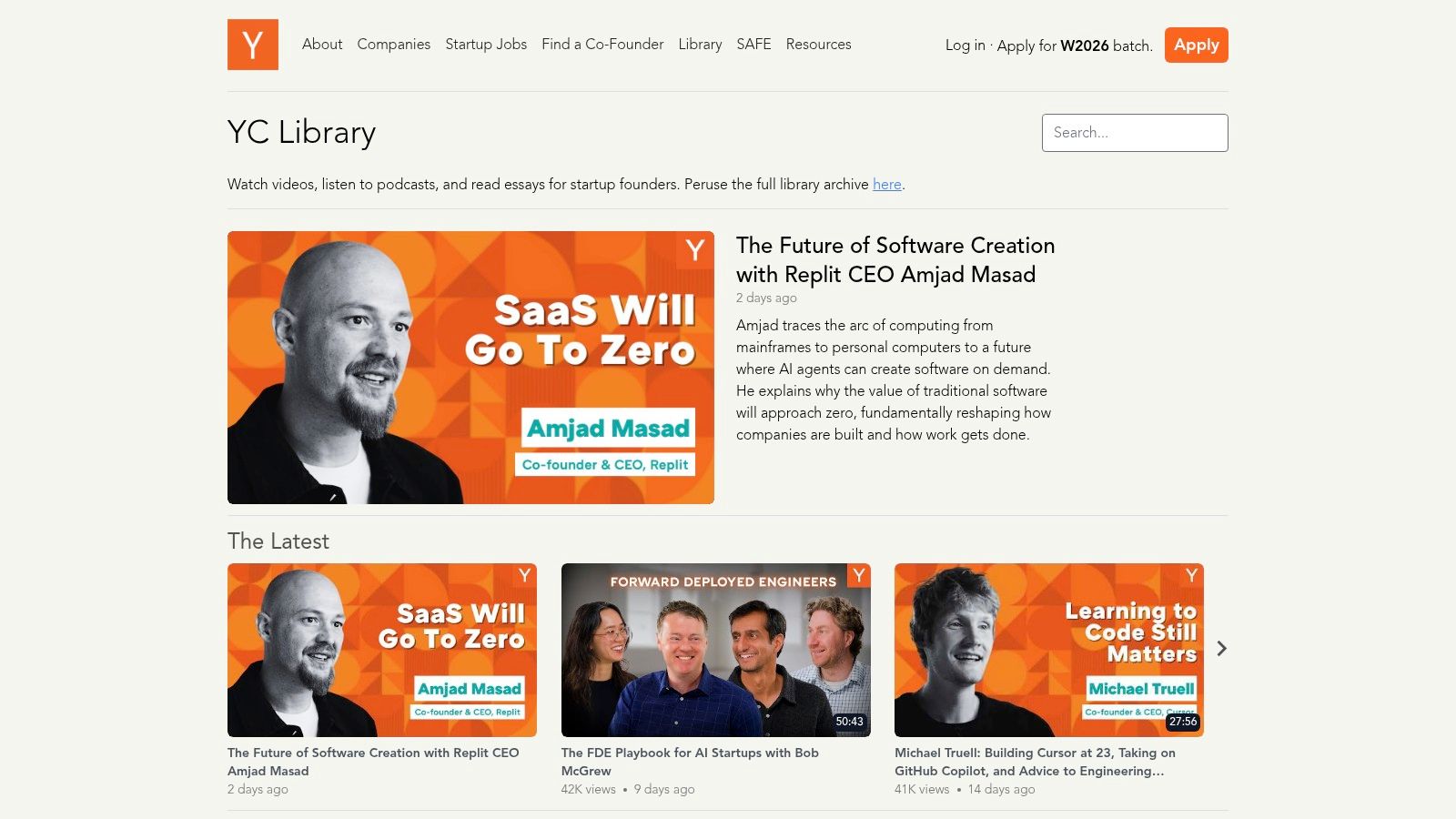
Unlike a structured course, the library offers a self-directed path through curated content on idea validation, user acquisition, and MVP scoping. The advice is grounded in the real-world experiences of thousands of YC-backed companies, offering an unfiltered view into what works and what doesn't when you have limited time and resources. For PMs, this means direct access to battle-tested strategies.
Strategic Analysis & Actionable Takeaways
The value of the YC Library isn't just in the content itself but in how you apply its founder-centric mindset to a corporate or scale-up product role. It teaches you to think with the scrappiness and user-obsession of an early-stage founder.
-
Actionable Tip: Filter for 'How to Get Your First 10 Users': Search for essays and talks specifically on early user acquisition. These pieces are MVP gold because they force you to define a core value proposition so compelling that you can manually recruit users. This mindset is critical for validating new features or products, even within a large organization.
-
Feature to Leverage: The 'YC Essential Startup Advice' Guide: This curated collection acts as your syllabus. Start here to get a foundational understanding of the YC way of thinking. Pay close attention to Michael Seibel's "How to Plan an MVP," as it provides a practical framework for ruthlessly cutting scope to get to market faster.
-
Strategic Sourcing: Founder Stories and AMA Videos: Go beyond the instructional essays and watch interviews with founders of companies like Airbnb and Dropbox. They often reveal the "non-scalable" things they did early on, which are powerful real-world examples of an MVP in action. These stories provide context and inspiration for your own product challenges.
By treating the YC Library as a source of primary research from the startup trenches, you can inject a dose of entrepreneurial urgency and focus into your product practice.
Website: Y Combinator Startup Library
6. Product Hunt
Product Hunt is the ultimate daily spectator sport for product managers. It's not a single MVP but a living, breathing gallery of them, making it an essential platform for studying how modern products are introduced to the world. By observing daily launches, you can deconstruct positioning, messaging, and launch tactics from hundreds of real-world minimum viable product examples in real-time. It provides an unparalleled, free education in what resonates with an early-adopter audience.
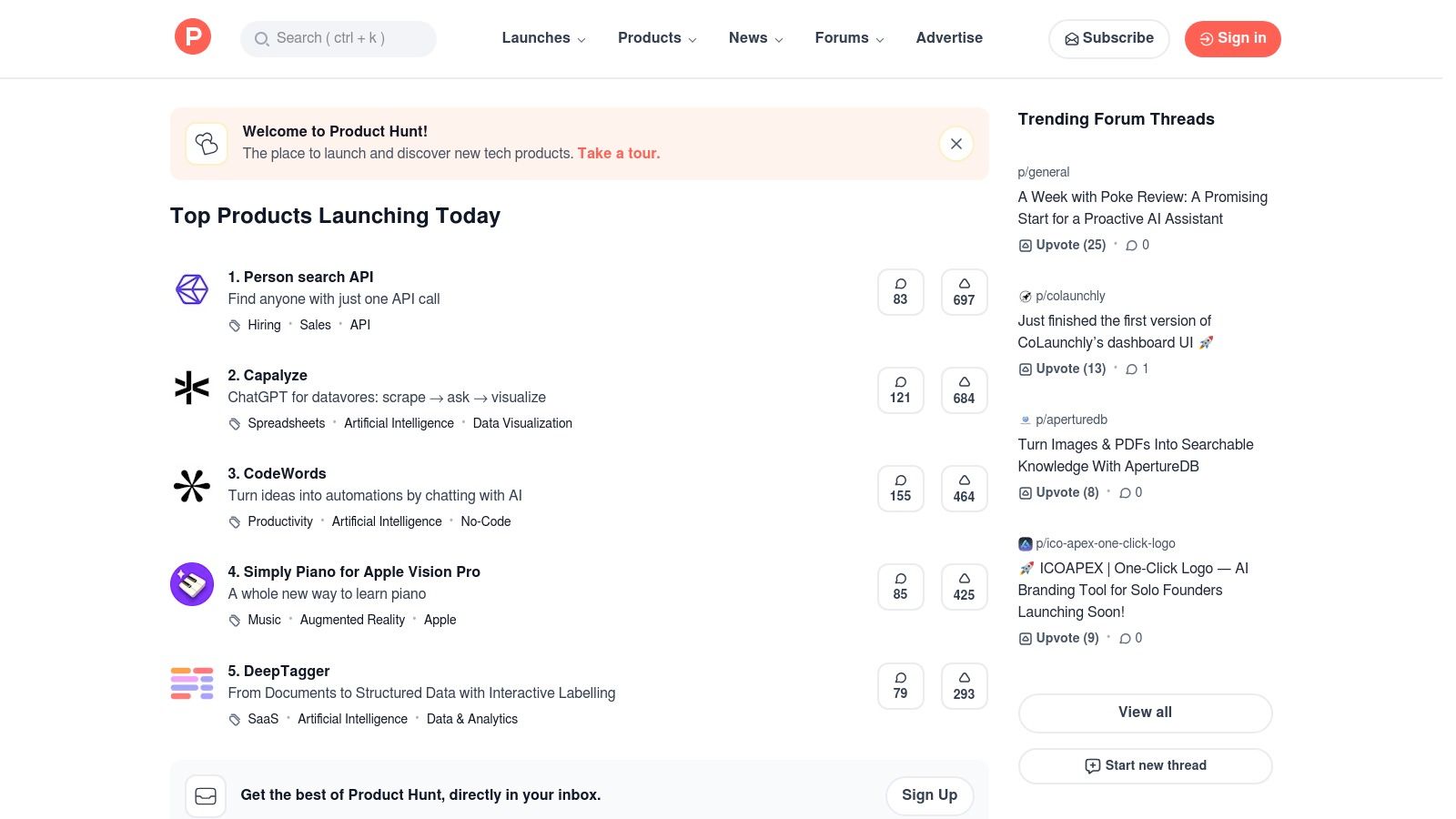
The platform’s real value is the direct access it provides to both the product and its creator. You can immediately see the core value proposition, test the product, read the maker’s comments explaining their "why," and observe raw, unfiltered user feedback. This combination of launch strategy and community reaction makes it a powerful competitive analysis and market research tool.
Strategic Analysis & Actionable Takeaways
For a PM, Product Hunt is a dynamic case study library. Used correctly, it moves beyond simple discovery and becomes a tool for strategic insight and trend-spotting.
-
Actionable Tip: Analyze the "Maker" Comments: The first comment is almost always from the product's creator. Scrutinize this post. How do they frame the problem they are solving? What was the MVP's core hypothesis? This comment often reveals the entire strategic foundation of the launch.
-
Feature to Leverage: Filter by Topic to Spot Patterns: Don't just browse the homepage. Use the topic filters (e.g., "AI," "Productivity," "No-Code") to analyze a specific niche. By reviewing the top 10 products in a category over the last month, you can quickly identify emerging feature trends and user pain points that are currently getting traction.
-
Strategic Sourcing: Reverse Engineer the Launch: When you find an interesting MVP, treat it like a case study. What was their headline? What imagery did they use? How did they describe the product in one sentence? Many launches are meticulously planned, providing a free playbook on how to frame an early-stage product for maximum impact. By understanding these launch mechanics, you can better define the objectives for your own product's growth.
By treating Product Hunt as a daily research briefing, you can keep your finger on the pulse of innovation and continuously refine your own understanding of what makes a successful MVP launch.
Website: Product Hunt
7. Udemy
For product managers looking to move from theory to tactical execution, Udemy provides a vast, on-demand learning library. It stands apart from theoretical books by offering practical, project-based courses on building and launching minimum viable product examples. Instructors often provide step-by-step guidance on everything from user story mapping and prototyping with Figma to running A/B tests with specific analytics tools. This hands-on approach is invaluable for PMs who learn best by doing.
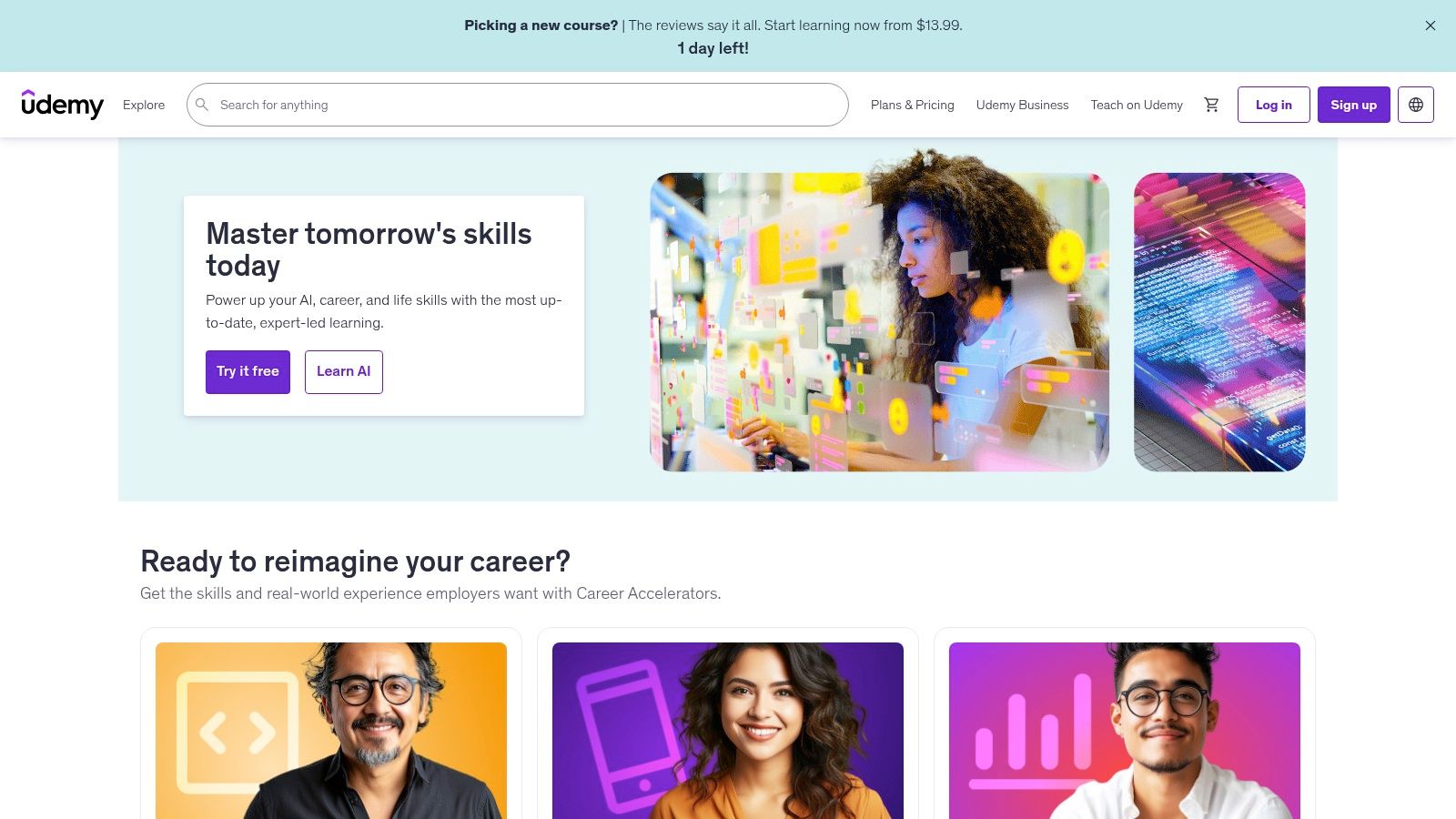
The platform’s key advantage is its accessibility and variety. Courses are frequently on sale for $10-$20, making professional development highly affordable, and lifetime access means you can revisit key concepts anytime. Whether you need a quick two-hour refresher on feature prioritization or a comprehensive 20-hour deep dive into a new no-code platform, Udemy’s catalog has a targeted solution that fits your schedule and learning objectives.
Strategic Analysis & Actionable Takeaways
Udemy is more than a course marketplace; it’s a tool for rapid, targeted skill acquisition. Product managers can use its features strategically to fill specific knowledge gaps and stay ahead of industry trends.
-
Actionable Tip: Audit the Course Curriculum First: Before purchasing, thoroughly review the course curriculum and any free preview lectures. Look for modules that cover your exact pain points, such as "Validating Assumptions" or "Building a Landing Page MVP." This ensures you invest time only in content that delivers an immediate return on your learning goals.
-
Feature to Leverage: Instructor Q&A and Reviews: Use the Q&A section to gauge an instructor's responsiveness and expertise. High-quality instructors are active in these discussions. Also, read recent reviews to check for outdated content, a common issue with tech-focused courses, ensuring the skills you learn are current and relevant.
-
Strategic Sourcing: Sort by "Newest" and "Highest Rated": Don't just default to the most popular courses. Sorting by "Newest" can surface courses on emerging tools or methodologies, like AI-powered MVP development. Combining this with a "Highest Rated" filter helps you find high-quality, modern content that gives you a competitive edge. This is crucial for roles like a data product manager, where staying current is non-negotiable.
By leveraging Udemy for targeted, tactical training, you can efficiently build the practical skills needed to complement your strategic understanding of MVP development.
Website: Udemy
Minimum Viable Product Examples Comparison
| Platform | Implementation Complexity 🔄 | Resource Requirements ⚡ | Expected Outcomes 📊 | Ideal Use Cases 💡 | Key Advantages ⭐ |
|---|---|---|---|---|---|
| Amazon | Low – simple purchase & read | Low – cost varies, multiple formats | Good foundational knowledge via books and stories | Self-paced learning, quick info access | Wide selection, instant access, competitive price |
| Strategyzer | Medium – involves courses and workshops | Medium – premium pricing, time for workshops | Practical MVP execution skills with official frameworks | Structured MVP learning and validation design | Authoritative content, visual templates, refunds |
| Coursera | Medium – course enrollment and assignments | Medium – low cost, financial aid available | University-level MVP understanding and certificates | Teams needing formal education and certificates | Academic quality, low cost, certificate options |
| Harvard Business Publishing | High – case study analysis & simulations | High – purchase needed, sometimes educator-only | Deep insights from real business cases | MBA programs, deep business case learning | High-quality real-world cases, educator resources |
| Y Combinator Startup Library | Low – self-curated reading and videos | Low – free access | Practical startup MVP insights and founder advice | Startup founders and self-starters | Free, founder-driven, frequently updated content |
| Product Hunt | Low – browsing and community engagement | Low – free platform | Real-time MVP launch examples and community feedback | Discovering and benchmarking live MVPs | Daily updates, community insights, free access |
| Udemy | Medium – course selection and self-paced study | Low to medium – varying costs, lifetime access | Practical MVP skills from diverse instructors | Quick refreshers and varied learning styles | Large course catalog, frequent discounts |
Making the MVP Your PM Superpower
The journey through these diverse minimum viable product examples reveals a powerful, unifying truth: success isn't about launching a perfect, feature-complete product. It's about launching the right product, and the fastest way to find "right" is through disciplined, hypothesis-driven experimentation. From Amazon’s rudimentary single-page bookstore to Product Hunt's simple email list, each case study demonstrates that the most critical asset at the start is not code, but validated learning.
These aren't just fascinating startup stories; they are tactical playbooks for the modern Product Manager. The core function of an MVP is to de-risk your biggest assumption with the smallest possible investment of time and resources. By internalizing this principle, you shift from being a feature executor to a strategic business partner who mitigates risk and accelerates growth.
Turning MVP Theory into Actionable Strategy
To make this your superpower, you must move from passive learning to active implementation. The ability to scope, define, and execute an effective MVP process is a key differentiator that separates top-tier PMs who get promoted from those who simply manage backlogs. It requires a deep and holistic grasp of your position's strategic levers. A foundational step in this journey is fully understanding the product management role and how it connects business goals with user needs.
Here is a 3-step actionable framework you can implement with your team in the next 24 hours:
- 1. The 'One-Big-Thing' Assumption Audit: Gather your team and review one upcoming feature. Ask, "What is the single biggest assumption we are making that, if proven wrong, would cause this entire initiative to fail?" Write this assumption on a whiteboard. Example: "We assume our enterprise users will pay an extra $10/month for an AI-powered reporting feature."
- 2. The 'Launch-to-Learn' Reframe: Shift the project's goal from "shipping the feature" to "validating the assumption." Your new objective is not a deliverable; it's an answer. This reframe immediately forces the team to think about the cheapest, fastest way to get evidence.
- 3. The MVP Type Selection: Based on your core assumption, choose the right MVP. For the example above, you don't need to build the AI. A 'Wizard of Oz' MVP, where you manually create the reports behind the scenes for a few pilot customers, would validate the willingness-to-pay assumption with almost zero engineering cost.
Choosing Your Toolkit for Execution
Executing an MVP often requires a lean toolkit. Consider these factors when selecting tools to support your experiment:
- Speed to Market: Prioritize tools that allow for rapid setup and iteration. Platforms like Strategyzer for business model validation or simple landing page builders like Carrd or Unbounce can get you live in hours, not weeks.
- Data Collection: Ensure your chosen tool can effectively capture the specific metric you need to validate your hypothesis, whether it's email sign-ups via Mailchimp, pre-orders with Gumroad, or user engagement data via Mixpanel.
- Cost-Effectiveness: The goal is to learn cheaply. Opt for free tiers or low-cost tools that provide just enough functionality to run your test.
By consistently applying this MVP mindset, you transform your role. You become the driving force of innovation, building a reputation as a leader who delivers impactful results efficiently. This is the skill that gets you noticed, earns you trust, and accelerates your career trajectory from PM to product leader.
For PMs committed to reaching the top 1% of the profession, continuous learning from proven leaders is non-negotiable. Aakash Gupta's renowned newsletter offers deep dives into the strategic frameworks and career tactics used at FAANG and high-growth startups. Subscribe to Aakash Gupta to get world-class product insights delivered directly to your inbox.
