You’re in a review meeting. The game pitch is polished, the target audience sounds plausible, and the roadmap looks tidy. Then someone asks the only question that matters: how do you know this is worth building?
That’s where product managers get exposed.
A lot of PMs in games can write a positioning memo, summarize player feedback, and keep a sprint plan moving. Fewer can reduce uncertainty before a studio spends meaningful design, engineering, art, and user acquisition budget. In practice, that’s what prototype type games are really about. Not just rough versions of future titles, but structured experiments that answer a specific business question.
The PMs who rise fastest usually get good at one thing early. They stop arguing from intuition alone. They bring evidence. In game teams, the fastest path to evidence is a prototype matched to the risk in front of you.
Your Next Big Game Idea Is Probably Wrong
Most game ideas start out over-scoped and under-tested. That isn’t a criticism. It’s the natural result of creative teams falling in love with a finished vision before proving the core interaction.
A PM’s job isn’t to kill ambition. It’s to separate the exciting parts of a concept from the assumptions hiding underneath it. Is the loop understandable? Is the session structure satisfying? Does the control scheme support the fantasy? Can the team ship the required level of quality? Those are different risks, and each one needs a different test.
Why this matters for your career
Studios don’t promote PMs because they had the loudest opinion in pre-production. They promote PMs who consistently make the next decision clearer.
When I’ve seen product managers gain influence on game teams, it usually came from one pattern. They used prototypes to turn vague debate into a concrete choice. Instead of saying, “players will probably like this combat layer,” they said, “we tested the combat layer in a constrained prototype, here’s what players understood, where they got stuck, and what we should cut before production.”
That changes how design leaders, producers, and GMs see you. You stop sounding like a coordinator. You start sounding like an owner.
Prototyping is not a design side quest. It’s the PM’s cleanest tool for risk reduction.
Prototype type games are business tools
The phrase prototype type games often gets treated as a catalog of formats. Paper prototype. Clickable prototype. Greybox. Vertical slice. That framing is incomplete.
The fundamental question is simpler: what are you trying to learn, and who needs to be convinced?
A prototype can help you:
- Validate a mechanic before engineering commits.
- Test user flow before UI work hardens.
- Pressure-test feasibility before a tech dependency becomes a schedule problem.
- Earn budget by making leadership feel the promise, not just hear it.
That’s why strong PMs track startups, experimental teams, and emerging studios closely. If you want a quick sense of where interactive entertainment teams are pushing on new experiences, see Founder Connects' top picks. It’s useful context when you’re evaluating whether your own concept is differentiated or just familiar with a new skin.
The PMs Prototyping Decision Matrix
Development teams frequently waste time by building the wrong prototype at the wrong moment. They create a polished slice when they need a mechanic test. They produce a broad feature mock when leadership needs confidence in one decisive experience.
The fix is a simple rule. Match the prototype to the risk, not to the enthusiasm level of the team.
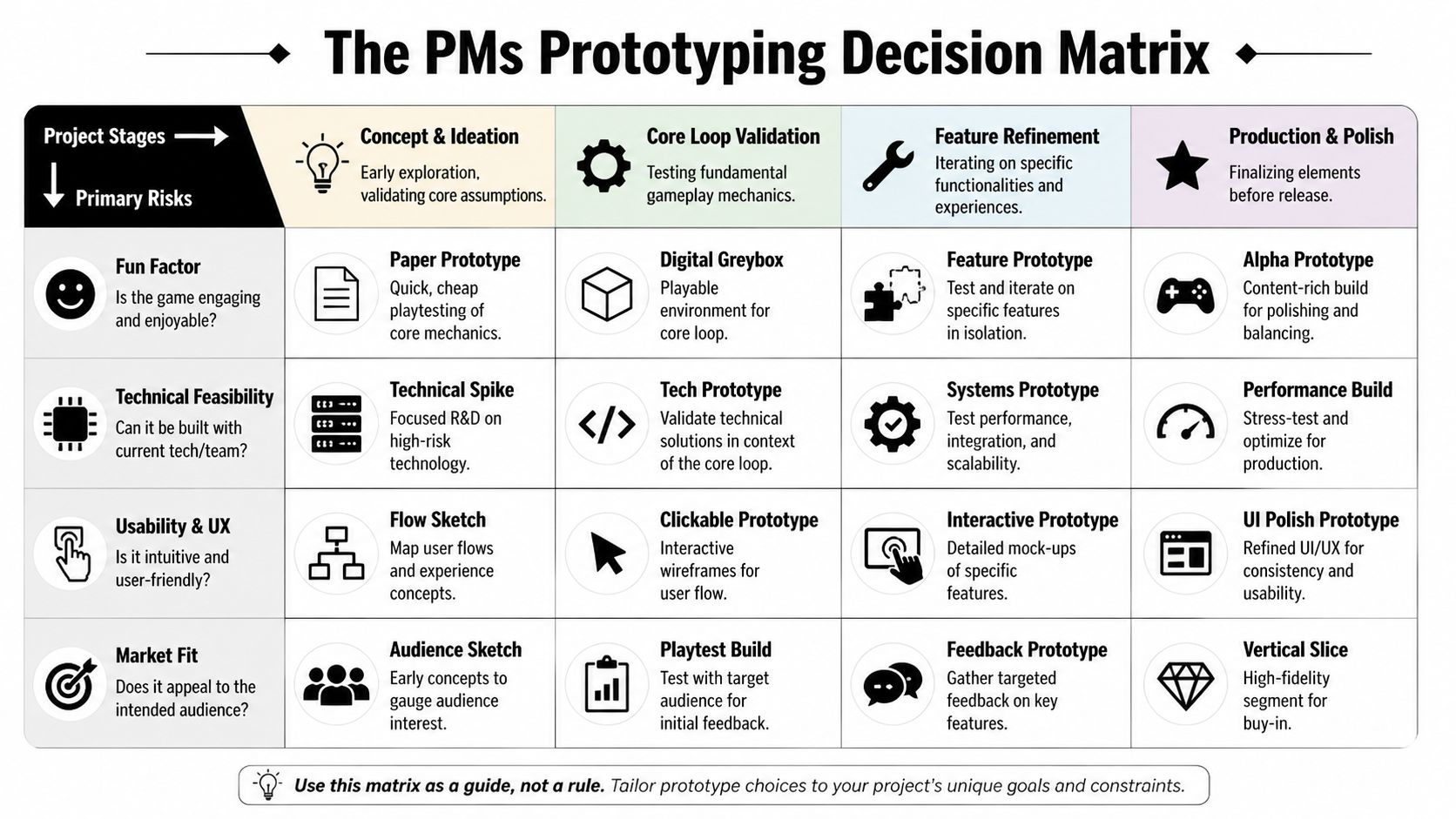
A practical decision matrix
| Project stage | Primary risk | Best prototype type | What it answers | Who it persuades |
|---|---|---|---|---|
| Concept and ideation | Is the idea understandable and engaging? | Paper prototype | Can players grasp the loop and make meaningful choices? | Designers, PM, creative lead |
| Concept and ideation | Can we build the hardest part? | Technical spike | Does the riskiest system work at all? | Engineering lead, technical director |
| Core loop validation | Does the moment-to-moment play hold up? | Greybox prototype | Does movement, pacing, and interaction feel right? | Design, engineering, production |
| Core loop validation | Is the interface intuitive? | Clickable prototype | Can players navigate key flows without help? | UX, PM, stakeholders |
| Feature refinement | Does this feature improve the game or clutter it? | Interactive feature prototype | Is the feature worth the implementation cost? | Feature team, production |
| Production and polish | Is the vision fundable? | Vertical slice | Can this game deliver a compelling high-quality promise? | Exec team, publishing, investors |
That matrix gets sharper when you make one more decision. Ask whether the current risk is player risk, technical risk, usability risk, or market risk. If you want a clean way to structure those trade-offs, this framework for decision making is a useful model for PMs who need to justify why one uncertainty should be tackled before another.
What works and what fails
Here’s the mistake I see most often. Teams try to answer too many questions with one prototype. That creates mushy output.
A good prototype should have one dominant purpose:
- Paper prototypes test rules and decision tension.
- Clickables test flow and comprehension.
- Greyboxes test feel, space, and interaction.
- Vertical slices test belief. Belief from executives, partners, or publishers.
If your prototype tries to test all four at once, it usually becomes slow, expensive, and politically hard to interpret.
Practical rule: If a prototype can “sort of” answer five questions, it’s probably not scoped tightly enough to answer any of them well.
Speed matters more than completeness
Modern engines changed the economics here. Game prototyping with tools like Unity and Unreal Engine can cut development timelines by up to 50%, according to Agate’s overview of game prototyping. That’s one reason prototype type games matter far more now than they did when rapid experimentation required much heavier custom setup.
The PM implication is straightforward. You no longer need to wait for a long pre-production runway to create evidence. You can ask for smaller, sharper experiments earlier.
Use this simple sequence when planning:
- Name the riskiest assumption.
- Choose the cheapest prototype that can test it.
- Define the decision that follows from the result.
- Limit stakeholders to the people who need the answer.
If you do only that, your roadmap discussions get better fast.
Paper Prototypes The Fastest Path to an Answer
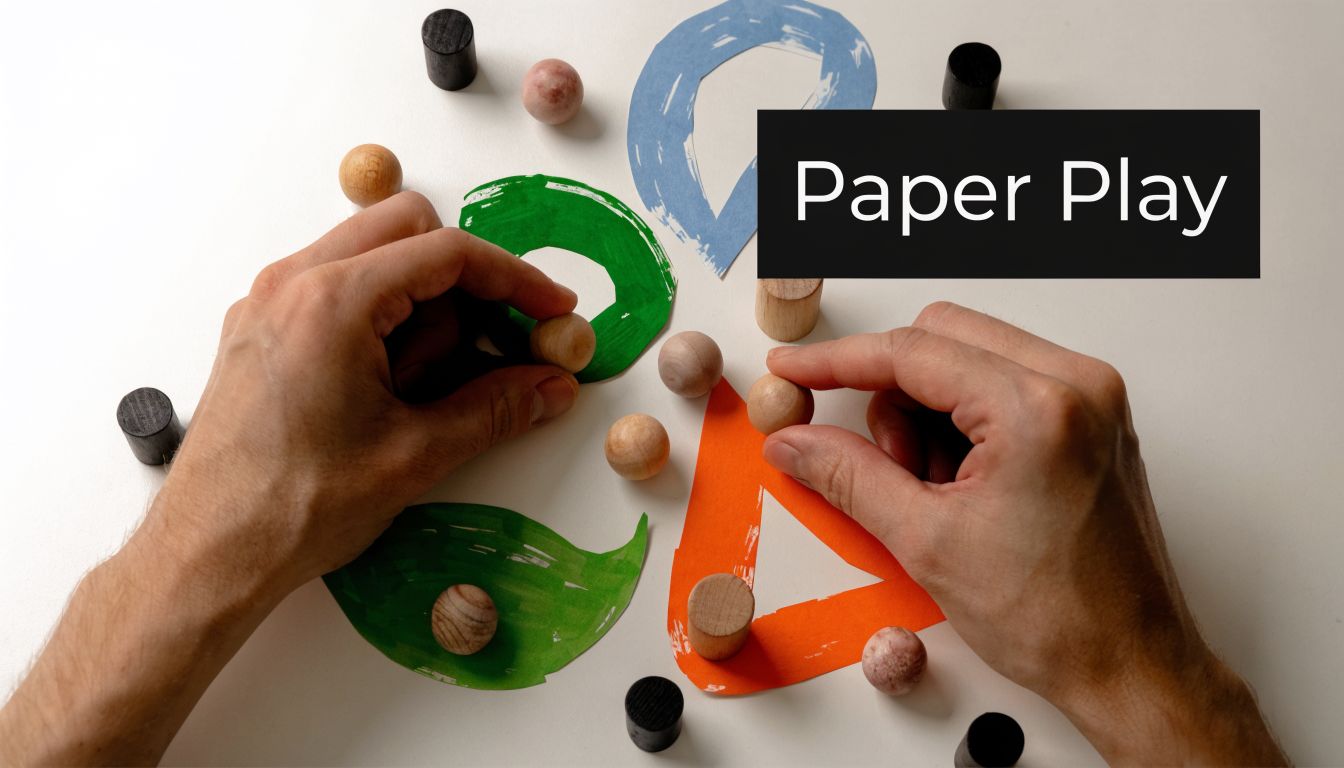
The cheapest prototype in games is often the most useful one. Before anyone opens Unity, asks concept art for support, or starts debating a content roadmap, you can test the structure of a game with paper, cards, tokens, sticky notes, and a facilitator.
That sounds primitive. It is also one of the best ways to find out whether the decision layer of your game is interesting.
When paper beats code
Paper prototypes are best when your open question is about rules, incentives, turn structure, information clarity, or player choice. They’re weak for timing-sensitive action, spatial feel, and animation-dependent feedback. PMs get value from them because they compress the cost of being wrong.
A mobile puzzle concept is a good example. You can sketch the board, create movable pieces, simulate constraints manually, and watch whether players understand the objective. For a card battler, you can test energy systems, progression rules, and hand tension before any digital implementation.
The important thing is to treat the session like a product test, not a casual brainstorm.
A 48-hour paper prototype sprint
Use this workflow:
Write one learning goal
Example: “Can new players understand the risk-reward loop within one session?”Strip away presentation
Use index cards, printed icons, sticky notes, and handwritten values. Don’t decorate. Visual polish creates false confidence.Assign a game master
One person should simulate system responses, enemy behavior, or random outcomes. This is faster than building rules automation.Recruit the right testers
Don’t rely only on internal devs. Developers are unusually tolerant of rough edges and unusually good at inferring intended systems. You need some people who haven’t spent weeks inside the concept.Observe before explaining
If testers need a long setup speech, that’s already signal.End with cut questions
Ask what confused them, what decision felt meaningful, and what they’d remove.
If you want a good mental model for low-fidelity work, this piece on prototype fidelity maps well to game PM thinking. The key is using the lowest fidelity that can still answer your current question.
What to capture in the room
Comments are recorded and behaviors are forgotten. Behaviors matter more.
Track:
- Points of hesitation: Where did the player pause or ask for clarification?
- Unexpected strategies: Did they discover a dominant tactic or a broken loop?
- Emotional response: When did they lean in, laugh, argue, or disengage?
- Rule load: Which mechanics required repeated explanation?
The test is successful when it reveals what to cut, not when it makes the team feel validated.
A good paper prototype often kills the wrong feature early. That’s a win.
What not to do
Paper prototyping fails when PMs ask it to prove “fun” in the broadest sense. It can’t validate moment-to-moment action feel for a reflex-heavy game. It also fails when the session turns into internal debate about future polish.
Stay disciplined. If the mechanic requires responsiveness, camera behavior, or movement precision, graduate to digital quickly. But don’t skip paper just because the team is eager to build. In prototype type games, speed of learning beats speed of production almost every time.
Digital Prototypes From Clickables to Greyboxes
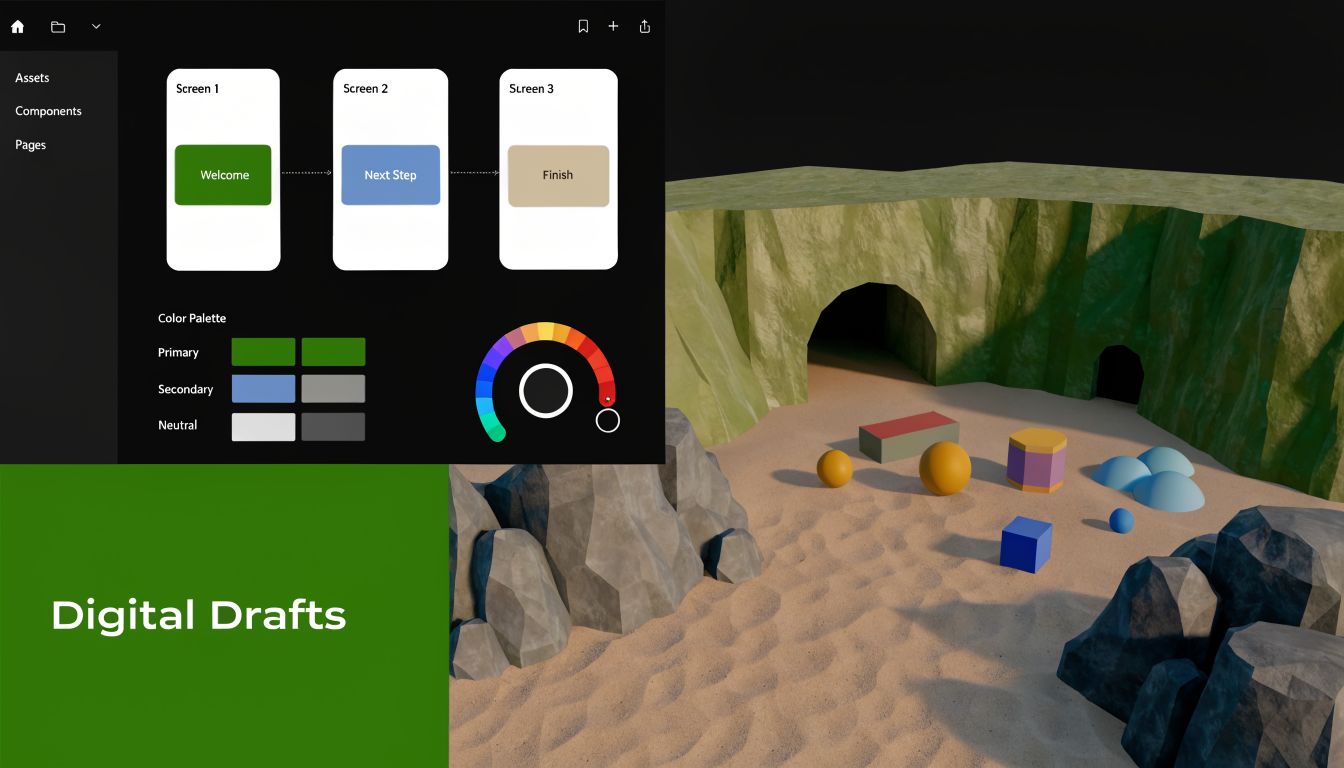
Digital prototypes sit in the middle of the risk ladder. They’re more expensive than paper, but far cheaper than full production. For PMs, two formats matter most here: clickable prototypes and greybox prototypes.
They solve different problems. Treating them as interchangeable is where teams lose time.
Clickables for flow and comprehension
Use Figma or a similar tool when your uncertainty lives in menus, onboarding, inventory, meta progression, shop flow, quest presentation, or session transitions. A clickable prototype is the right tool when you need to know whether players can proceed through the product without confusion.
This matters more than many game PMs admit. A strong core loop gets undermined fast by weak UX around progression, rewards, or loadout management.
A clickable should answer questions like:
- Can players find the next meaningful action?
- Do labels and information hierarchy make sense?
- Does onboarding reveal too much, too little, or the wrong thing?
- Can stakeholders align on the intended journey before engineers commit?
The PM value is political as much as product-driven. Clickables make abstract UX conversations concrete. That reduces interpretive drift between product, design, and engineering.
Greyboxes for feel, space, and system truth
Greybox work is where 3D prototype type games start becoming strategically decisive. A greybox uses primitive geometry and placeholder objects to test locomotion, traversal, encounter spacing, line of sight, combat readability, and environmental flow.
According to Game-Ace’s game prototyping guide, greybox prototypes often use low-poly placeholders in the 500-2000 polygons range, and teams that skip this stage risk 30-50% rework in full production. The same source notes this approach can cut development timelines by 20-40% by exposing problems before high-fidelity asset investment.
That’s not just a level design concern. It’s a PM concern because rework compounds across art, engineering, QA, and schedule confidence.
If you’re partnering with design and tech on a playable build, this guide on how to build a prototype of a product is a useful cross-functional framing tool. The principle carries over well to games. Build just enough to expose the truth.
A side-by-side PM lens
| Prototype | Best for | Weak for | PM watchout |
|---|---|---|---|
| Clickable | Menus, onboarding, progression flows, UI comprehension | Action feel, spatial gameplay, encounter tuning | Teams may overestimate how much player delight it predicts |
| Greybox | Movement, pacing, camera, combat spacing, exploration flow | Final visual appeal, narrative polish, brand presentation | Teams may underinvest in UX and overfocus on raw mechanics |
Greybox tells you whether the game works. Clickables tell you whether the player can use it.
What experienced PMs do differently
Strong PMs don’t ask “should we build a prototype?” They ask “what kind of truth do we need next?”
For example:
- If players abandon the onboarding conceptually, use a clickable.
- If combat looks good on paper but feels muddy in play, use a greybox.
- If level flow creates debate between design and engineering, the greybox becomes the neutral ground.
In practice, the handoff matters. A clickable often surfaces language and hierarchy issues that later affect your playable. A greybox often reveals interaction and pacing problems that later reshape your UX assumptions. The formats are different, but the PM’s responsibility is the same. Keep each prototype honest about what it can and can’t prove.
The Vertical Slice How to Get Your Project Greenlit
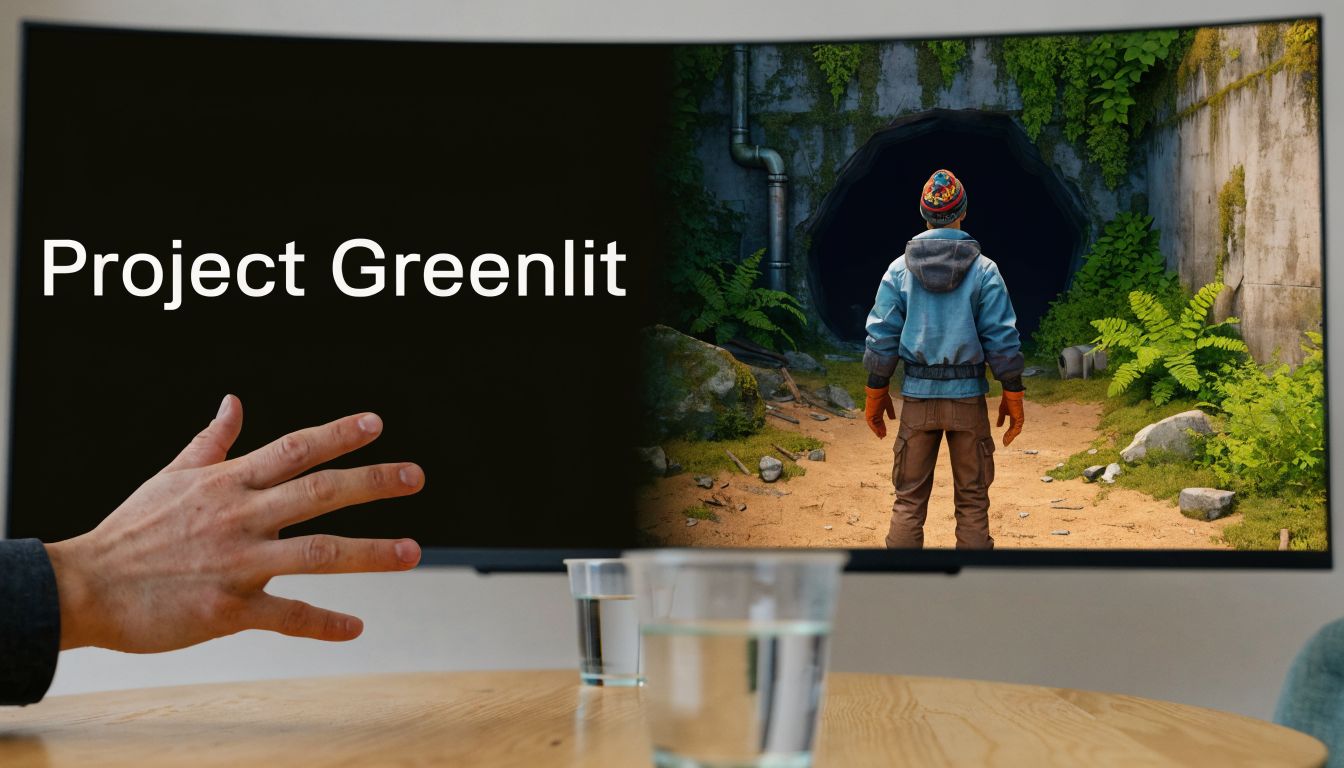
A vertical slice is not a trailer with controller input. It is not a prettier prototype. It is a strategic artifact designed to make leadership believe a game can land.
That difference matters because teams often build vertical slices too early, too broadly, or for the wrong audience. A PM who understands how to scope one well becomes much more valuable in pre-production and greenlight discussions.
What a vertical slice really does
A horizontal slice samples many parts of the game shallowly. A vertical slice goes deep on a narrow segment. That depth is the point.
Leadership usually needs answers to a handful of expensive questions:
- Can the team create a compelling player fantasy?
- Does the art direction hold up in motion?
- Can the technology support the experience being sold?
- Is the quality bar achievable at production scale?
A vertical slice should answer those with one tightly crafted sequence.
How to scope it without losing the plot
Take a hypothetical open-world RPG. The wrong vertical slice tries to include exploration, faction systems, crafting, combat, cinematic dialogue, a large world map, and multiple quest branches. That usually produces a bloated build that proves very little.
The right slice might include:
- One village hub with polished traversal and NPC interaction
- One quest line with clear narrative stakes
- One combat encounter that showcases the core mechanics
- One reward moment that demonstrates progression payoff
That’s enough to sell the experience if the choices are deliberate.
Cut everything that doesn’t support the central promise. If your game is about tense stealth fantasy, don’t spend precious slice budget on a broad crafting system. If your game is about expressive combat, don’t inflate the slice with side activities that dilute the emotional peak.
A strong vertical slice sells the future by over-proving one small piece of it.
Use the slice to align stakeholder language
Vertical slices are also communication tools. Different stakeholders look for different evidence.
| Stakeholder | What they’re really asking |
|---|---|
| Studio head | Is this worth funding further? |
| Creative director | Does this deliver the intended fantasy? |
| Engineering lead | Can the architecture support what’s being promised? |
| Production | Is the quality target remotely schedulable? |
| Publishing or finance | Is there a credible market-facing hook? |
Your job as PM is to make sure the slice isn’t judged only on aesthetics. You need evaluation criteria in advance. If not, leadership reviews can drift into subjective taste wars.
A useful way to reset a room is to ask, “Which risk is this slice meant to reduce?” That question tends to cut through unhelpful feedback quickly.
Here’s a useful example of how teams discuss prototype and concept evolution in practice:
Common PM mistakes with vertical slices
Three mistakes show up repeatedly.
First, PMs let slices turn into mini-games that need to be production-ready. They don’t. They need to be convincing.
Second, they allow “nice to have” content to crowd out the core promise. That creates polish without clarity.
Third, they fail to define what a greenlight decision depends on. If leadership wants proof of combat readability, visual ambition alone won’t get you there.
Prototype type games become career accelerators when you can build consensus around a smaller, sharper ask. A vertical slice is where that skill becomes visible to executives.
Measuring Success The Right KPIs for Each Prototype
A prototype without a measurement plan is just an expensive conversation starter.
PMs need different metrics at different fidelity levels. The goal isn’t to force every prototype into a dashboard. It’s to create evidence that supports a real decision. Some of that evidence is qualitative. Some is operational. Some is market-facing.
Match the KPI to the prototype
Here’s the practical mapping:
| Prototype type | Best measurement approach | What good evidence looks like |
|---|---|---|
| Paper prototype | Coded observation notes and repeat confusion points | Clear pattern in misunderstandings, strategy depth, and rule friction |
| Clickable prototype | Task completion and time-on-task | Players complete core flows without facilitation |
| Greybox prototype | Structured playtest observations on pacing, clarity, and movement feel | Players navigate intended routes and use systems as expected |
| Vertical slice | Stakeholder confidence tied to explicit greenlight criteria | Leadership can connect the slice to funding, scope, and strategy decisions |
| Hyper-casual market test | CPI and IPM | Acquisition cost and conversion quality justify further investment |
For broader PM work, this resource on measurements of success is worth keeping handy. The useful habit is the same across industries. Decide in advance what evidence would cause you to proceed, pivot, or stop.
The market-facing KPI that changes the conversation
In hyper-casual prototypes, the most important KPI is Cost Per Install. Supersonic notes that a prototype with CPI under $0.30 in initial testing has a significantly higher probability of market success, and that this process lets teams discard up to 90% of unviable prototypes early in order to focus resources on ideas with clearer commercial potential, as described in Supersonic’s KPI guide for testing hyper-casual prototypes.
That’s one of the clearest examples in games of product discipline beating attachment. Teams don’t keep pushing because they “believe.” They keep pushing because a market test gave them permission.
Supersonic also highlights IPM as a complementary metric in prototype testing. In plain terms, it helps teams understand whether ad impressions are converting into installs strongly enough to suggest scalable interest.
Your taste matters. Your test result matters more.
Why this matters beyond mobile
Even if you don’t work in hyper-casual, the principle is useful. Early prototypes need go / no-go criteria that leadership can trust. Once your evidence ties to business reality, you become easier to back.
This is particularly important if you’re pitching externally. If you’re preparing for publishing or fundraising conversations, Gritt.io's database of gaming investors can help you identify who invests in this category. But don’t reach out with a vague concept deck. Bring prototype evidence that shows you understand what has been tested, what remains uncertain, and what the next milestone should prove.
A simple PM scoring habit
After each prototype cycle, force a written score on three questions:
- Did we reduce the primary risk?
- Did the result change our roadmap?
- Would I ask for more money based on this evidence?
If the answer to the third question is no, don’t pretend the prototype was more conclusive than it was.
AI-Powered Prototyping Tools and Workflows for PMs
AI lowered the barrier to prototyping, but it didn’t remove the need for judgment. The best PMs use AI to accelerate option generation, placeholder creation, and structured iteration. They don’t let it decide what question the prototype should answer.
That distinction matters. A weak PM uses AI to create more artifacts. A strong PM uses AI to create the right artifact faster.
A practical tool stack
| Tool | Prototype type | Key PM use case | AI integration |
|---|---|---|---|
| Figma | Clickable prototype | Test UI flow, onboarding, menus, and meta systems | Use AI features and LLMs to draft copy variants and flow alternatives |
| Miro | Paper and collaborative concept prototype | Remote workshop boards, system mapping, mechanic comparison | Use LLMs to summarize notes and generate test scripts |
| Unity | Playable and greybox prototype | Fast mechanic validation, systems testing, and mobile-oriented experimentation | Pair with code assistants for boilerplate scripting and scene setup |
| Unreal Engine | Playable and greybox prototype | 3D feel, spatial testing, and high-impact presentation work | Use AI assistance for scripting support, content ideation, and documentation |
| ChatGPT or Claude | Cross-format support | Idea generation, test plans, debrief synthesis, prompt drafting | Core reasoning layer for PM workflows |
Where AI actually helps
Use AI in four lanes.
Mechanic exploration
Prompt an LLM to generate many variations of a core loop, then score them against constraints like session length, input complexity, monetization fit, or audience familiarity. The output won’t be final design. It will widen your option set quickly.
Artifact generation
Use image models for mood boards, placeholder card frames, item icon directions, or environment style references. This is especially useful when the team is misaligned on tone.
Documentation compression
Feed playtest notes into an LLM and ask it to cluster failures by comprehension, pacing, motivation, or controls. PMs waste too much time manually summarizing messy sessions.
Prototype scripting support
If you work with a designer or technical artist in Unity, AI coding assistants can help create quick interaction scaffolding. That won’t replace engineering judgment, but it can speed up low-risk prototype logic.
If you’re interested in the narrative side of experimental products, Dunia has a thoughtful look at how teams build interactive story worlds. It’s a useful reminder that prototyping isn’t only about mechanics. It’s also about testing how players inhabit a world.
Prompts PMs can actually use
Try prompts like these:
Mechanic ideation prompt
“Generate 20 game loop variations for a session-based mobile strategy game. Limit each loop to one primary verb, one escalation mechanic, and one retention hook. Flag which assumptions each loop would require testing first.”Clickable planning prompt
“Draft a six-screen onboarding flow for a midcore mobile RPG. Prioritize clarity of party setup, first battle, and reward claim. Identify where users are most likely to misunderstand the system.”Playtest synthesis prompt
“Cluster these raw tester notes into top usability failures, engagement moments, and open product risks. Then recommend the next prototype type to reduce the biggest remaining uncertainty.”Stakeholder review prompt
“Turn these prototype findings into an executive update. Use decision language. Include what we learned, what we cut, and what evidence is still missing before greenlight.”
For PMs exploring this further, this piece on AI prototyping for product managers is a good extension.
The trade-off to manage
AI makes it easier to create plausible-looking output. That can be dangerous.
A polished AI-generated asset can create false momentum around an unproven concept. A prototype should become more believable only when it becomes more informative. Keep asking the same question: did this artifact reduce a real risk, or did it just make the idea look finished?
That’s the discipline that separates modern PMs from prompt operators.
Conclusion From Prototype to Product Leader
The best PMs in games don’t just ship features. They reduce uncertainty faster than the people around them.
That’s why prototype type games matter so much. A paper prototype helps you challenge assumptions before code hardens. A clickable helps you align UX before implementation gets expensive. A greybox tells you whether the game works in motion and space. A vertical slice gives leadership something stronger than optimism. It gives them evidence they can fund.
None of this is just about process. It’s about positioning.
When you champion the right prototype, you show judgment. When you define the success criteria clearly, you show strategic thinking. When you use evidence to cut scope, redirect investment, or win support, you stop acting like a task manager and start operating like a product leader.
Start with one question this week. Identify the single biggest unproven assumption in your current project. Don’t make a giant plan. Don’t ask for a large team. Pick the cheapest prototype that can answer that question, scope a short sprint, and define the decision that will follow.
That’s how stronger products get made. It’s also how PM careers accelerate.
If you want sharper thinking on product strategy, growth, hiring, and career progression, Aakash Gupta is one of the most useful resources in the field. His writing and interviews are especially helpful if you’re trying to move from solid execution into high-impact product leadership.
